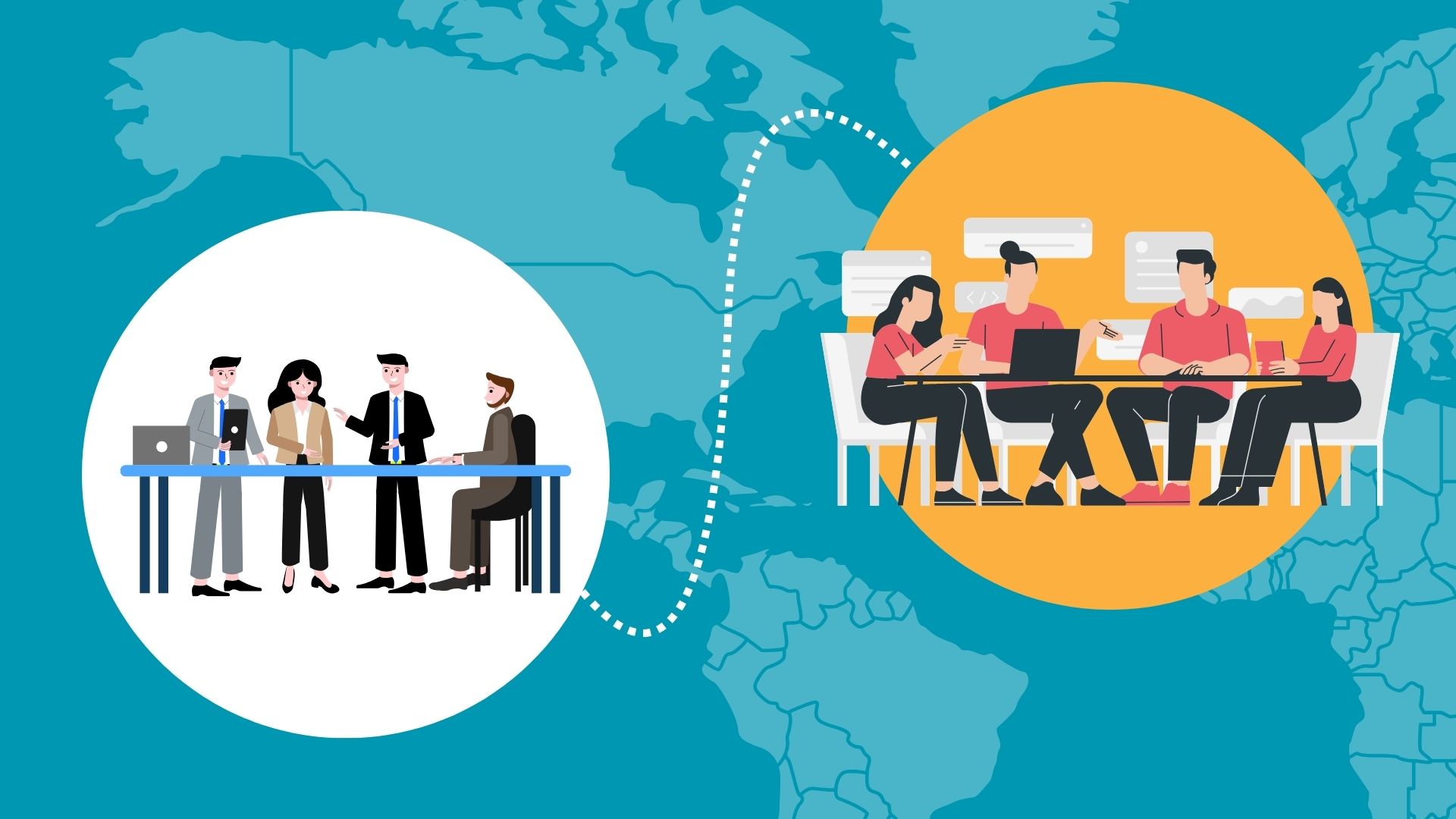
BOT Offshoring Best Practices: Aligning Technology, Strategy, and Global Teams
In 2026, US tech companies face a clear structural challenge: high-caliber engineers are scarce, compensation continues to rise, and competitors are shipping products while many teams are still stuck in long hiring cycles.
This pressure is driving more organizations toward the Build-Operate-Transfer (BOT) model. In a BOT arrangement, a company partners with an offshore provider to recruit, build, and operate a dedicated engineering team—then takes full ownership once the team is mature and performing. The approach offers faster setup, lower initial risk, and long-term control compared with traditional outsourcing or pure captive centers.
Remember, outsourcing projects alone do not equate to BOT. Think of it as planning and building a house with a contractor who handles everything for you within your budget and hands it off upon completion of the contract.
Meanwhile, pure outsourcing is fast, but you never own the team, and you're stuck paying vendor markups forever.
Successful BOT programs require deliberate planning, the right technology foundation, and intentional collaboration between onshore and offshore teams.
Let us share some insightful tips.
Which Enterprise Profiles Thrive Under BOT?
The Build-Operate-Transfer model has moved from an emerging, niche option to a mainstream strategy that US tech enterprises use to build offshore engineering teams while retaining long-term ownership.
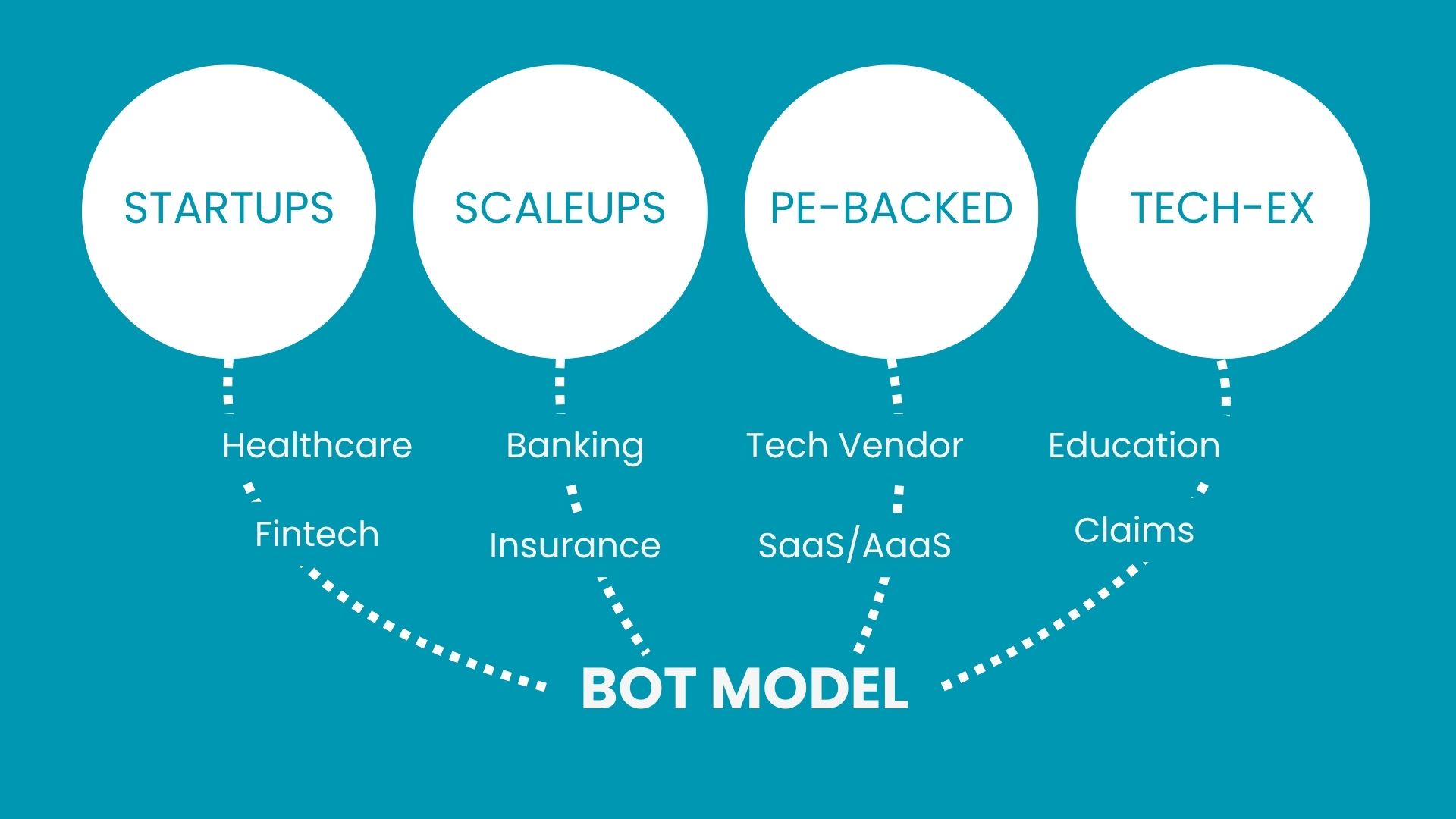
Here are five enterprise profiles that thrive under the BOT model.
1. Rapidly Scaling Tech Startups
-
How they thrive: They build global engineering teams instantly without waiting months to establish local legal entities.
-
The impact: They accelerate product launch timelines while maintaining high development quality.
2. Capital-Constrained Mid-Market Firms
-
How they thrive: They shift heavy upfront capital expenditure (CapEx) into predictable operating expenses (OpEx).
-
The impact: They scale operations smoothly without draining cash reserves needed for core growth.
3. Legacy Corporations Lacking Tech Expertise
-
How they thrive: They rely on an experienced vendor to source, hire, and train specialized digital talent.
-
The impact: They bypass internal hiring friction and fast-track critical digital transformation projects.
4. Enterprises Entering High-Risk Foreign Markets
-
How they thrive: They let a local partner navigate complex international compliance, tax codes, and labor laws.
-
The impact: They thoroughly test new geographic regions before committing to full corporate ownership.
5. Organizations Planning Major Mergers or IPOs
-
How they thrive: They build out a highly optimized, fully operational offshore subsidiary through the vendor.
-
The impact: They acquire a turn-key asset that immediately boosts the company's valuation and operational maturity.
It may include industry-specific companies such as those in healthcare, insurance and claims processing, fintech and banking, and enterprise software.
Recent industry research shows that about 36% of organizations with offshore operations have used or are evaluating a BOT approach, a sharp rise from 22% just a few years earlier. That kind of growth doesn't happen unless the model is delivering real results.
How to Approach the BOT Model?
Here is a step-by-step breakdown.
|
Phase |
Key Activities |
Typical Future |
Outcome |
|
1. Discover & Plan |
- Understand business goals and hiring needs. - Define team structure and required skills - Finalize project scope, budget, and timeline - Establish communication, governance, and success metrics |
1-2 weeks |
A clear BOT strategy, hiring roadmap, and execution plan aligned with business objectives. |
|
2. Build |
- Recruit and vet engineers - Set up infrastructure, tools, and secure development environments - Configure workflows and coding standards - Onboard the team and integrate with internal processes |
4-8 weeks |
A fully staffed, technically aligned engineering team ready to begin development. |
|
3. Operate |
- Manage day-to-day engineering operations - Deliver products using Agile practices - Monitor performance and quality - Handle HR, payroll, compliance, and team development - Continuously optimize processes and collaboration |
12-36 months (or as agreed) |
A mature, high-performing engineering team delivering consistent business value while operating as an extension of your company. |
|
4. Transfer |
- Prepare knowledge transfer and documentation - Transition HR, contracts, and operational processes - Transfer intellectual property and infrastructure - Complete leadership and operational handover |
1-3 months |
Full ownership of the engineering team, processes, systems, and intellectual property is transferred to your organization. |
|
5. Post-Transfer Support |
- Provide transition assistance if required - Offer technical and operational guidance - Resolve post-transfer issues and ensure business continuity |
Usually, 30-90 days |
A smooth transition with minimal disruption, allowing your team to operate independently with confidence. |
Best Practices for a Successful BOT Offshoring Strategy
A BOT model can fail even with a great partner if you skip the groundwork.
Here are some practices that consistently distinguish smooth transitions from painful ones.
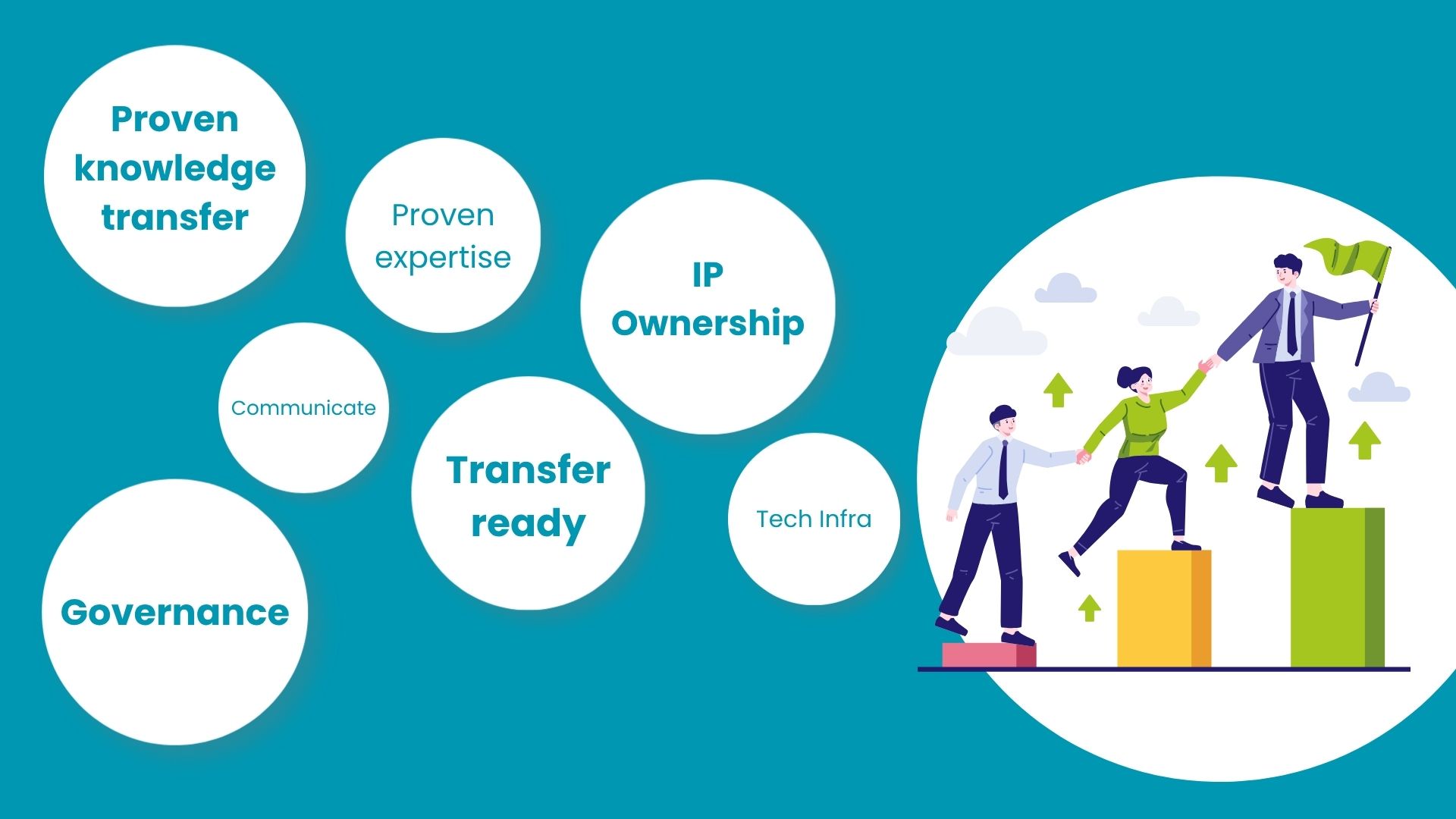
1. Choose a Partner with Proven Knowledge Transfer Systems
A successful BOT engagement depends on a seamless transition, so make sure your partner has structured processes for documentation, training, and a phased handover.
Don't just take their word for it. Ask to see sample documentation from a past transfer. Ask how they train new hires. Ask what happens in week one after ownership changes hands.
If a potential partner can't describe their documentation process in detail, that's a red flag worth taking seriously.
2. Prioritize Cultural Fit and Communication Style
Technology and contracts matter, but usually it is people who make or break offshore teams.
Alignment in work culture, communication style, and time zone collaboration plays a key role in long-term success.
Before you sign anything, spend time with the actual people who might join your team.
A team that shares your company's values and communication rhythms will integrate faster and stay longer.
3. Vet Legal and Compliance Expertise Carefully
Your partner should have real expertise in local regulations, employment law, and intellectual property protection to keep the engagement secure and compliant.
This isn't a box to check. Labor laws, tax rules, and IP ownership requirements vary widely by country, and getting them wrong can create liabilities that follow you long after the transfer is complete.
One advantage of BOT worth calling out here is that IP protection tends to be far cleaner than in traditional outsourcing.
4. Set Up Technology Infrastructure Before Day One
Nothing kills early momentum like a team that's ready to work but can't access the tools they need.
Laptops, VPNs, and security tooling need to be fully set up before day one so the offshore development team can start shipping work immediately.
This sounds basic, but it's one of the most common places BOT engagements stumble.
5. Retain Strategic and Governance Control From the Start
One of the biggest myths about offshoring is that you have to hand over control to get the benefits. That's not true with BOT.
The best BOT partners absorb the infrastructure and compliance workload while the client directs the actual work from day one.
That's the model working as intended: speed and infrastructure from the partner, direction and decision-making from you.
6. Plan the Transfer Phase Early, Not at the End
Too many companies treat the Transfer phase as an afterthought, something to figure out once the team is up and running. That's actually backward.
A thorough transfer typically includes complete documentation and process playbooks, transferred vendor relationships and account credentials, a shadow period during which your management team works alongside the provider's team, and the formal transfer of entity ownership, licenses, and registrations.
Build these milestones into your contract from day one. Know exactly what "ready for transfer" looks like before you start, so there's no ambiguity or last-minute negotiation when the time comes.
7. Use BOT as a Long-Term Capability, Not Just a Cost Fix
The companies getting the most out of BOT aren't just chasing cheaper labor.
For executives evaluating offshore expansion, BOT offers a structured path to ownership without requiring them to navigate foreign entity setup, local labor law, real estate, compliance, or talent acquisition from scratch.
It's increasingly becoming a strategic foundation for building global capability, not simply a way to cut costs.
Thus, treat your offshore team the way you'd treat any core part of your business.
Common Pitfalls to Avoid
Even a strong BOT strategy can go sideways if you overlook a few key risks:
-
Skipping the cultural vetting step: A technically strong team that doesn't mesh with your company culture will struggle to collaborate effectively, no matter how talented they are.
-
Underestimating the compliance workload: Employment law and IP rules differ by country. Don't assume your partner has this handled without checking.
-
Waiting too long to plan the transfer: If you start thinking about ownership handover only in the final months, you're already behind.
-
Choosing a partner based on price alone: The right BOT partner should function as a strategic partner that enables sustainable growth, not just a low-cost vendor.
-
Neglecting technology setup timelines: A delayed infrastructure rollout can push your entire project timeline back by weeks.
Final Thoughts
The Offshoring Build-Operate-Transfer model is much more than a cost and time-saving strategy. It helps businesses build scalable engineering teams, access global talent, and accelerate innovation while maintaining long-term control.
However, success comes down to the fundamentals: pick a partner with real knowledge-transfer systems, prioritize cultural and communication fit, nail down legal and compliance details, set up technology infrastructure properly, maintain strategic control from day one, and plan your transfer phase early.
Searchable Design, a reliable tech partner based in Nepal, offers state-of-the-art facilities with decade-long experience if you’re looking for a proficient offshoring BOT partner.
Related Post
RECOMMENDED POSTS

RECOMMENDED TOPICS
TAGS
- artificial intelligence
- agentic ai
- ai
- machine learning
- deepseek
- data science
- llm
- growth engineering
- ai/ml
- saas
- chatgpt
- ai development
- gpt
- openai
- social influencers
- cloud management
- mobile development
- scalable architecture
- software engineering
- captive center
- application
- api
- cloud optimization
- social media marketing
- social media
- gcp
- cloud storage
- aws
- modular saas
- api based architecture
- deep learning
- python
- user experience
- app development
- user interface
- data analysis
- data pipeline
- generative ai
- deepfake
- cybersecurity
- bot
- offshoring
- outsourcing
- modern medicine
- climate change
- llm models
- leadership
- it development
- empathy
- static data
- dynamic data
- ai model
- open source
- xai
- qwenlm
- bpa
- automation
- healthcare
- sales growth
- growth hacks
- data roles
- data analyst
- data scientist
- data engineer
- data visualization
- productivity
- database management
- sql query
- data isolation
- db expert
- database optimize
- customer expectation
- test
- artificial intelligene
ABOUT
Stay ahead in the world of technology with Iowa4Tech.com! Explore the latest trends in AI, software development, cybersecurity, and emerging tech, along with expert insights and industry updates.
Comments(0)
Leave a Reply
Your email address will not be published. Required fields are marked *